Midjourney free alternative: 5 tools worth trying in 2026
Summary
If you searched for a midjourney free alternative, it is probably because Midjourney has no free tier at all, plans start at $10 a month. We tested five tools that do let you start for free: OpenArt AI, Leonardo AI, Ideogram, Playground and Stable Diffusion, on the same three prompts, a photorealistic product shot, a painterly portrait, and a text-heavy poster. OpenArt AI won overall for model range and character consistency. Leonardo AI came closest on photorealism. Ideogram is the only one that reliably gets text right. None of them nail Midjourney's exact painterly look, and we say where each one still falls short.
The best midjourney free alternative right now is OpenArt AI, tested here against Leonardo AI, Ideogram, Playground and Stable Diffusion on the same three prompts. OpenArt AI wins on the widest model range plus LoRA character training for consistent product or brand visuals. Leonardo AI is the closest free match on photorealism, Ideogram wins the moment a prompt needs legible text, and Stable Diffusion is free in the truest sense if you accept the setup tax.
Why Midjourney sends people looking for a free option
Midjourney dropped its free trial years ago after it turned into a magnet for throwaway accounts and prompt abuse. Plans now start around $10 a month for the Basic tier, and the queue, resolution and commercial-use terms all scale with what you pay. That is a reasonable business decision for Midjourney. It is also exactly why "midjourney free alternative" is a search people type after opening their wallet for a single mockup they will never need again.
The tools below are not clones of Midjourney's painterly house style. None of them will hand you an identical result from an identical prompt. What they do offer is a real, no-card-required way to generate images while you decide whether paying for anything makes sense for your workflow.
How we compared them
We ran the same three prompts through each tool's free tier in July 2026: a photorealistic product shot on a plain background (the kind an Etsy or Shopify seller would need), a painterly character portrait (Midjourney's classic strength), and a poster layout with a short line of text baked into the image. We logged whether a credit card was required to start, how many free generations were realistically usable per day, and where the output broke down.
We are not claiming this replicates a full agency workflow. It is close to what a solo creator actually does before deciding whether a tool earns a subscription.
OpenArt AI: the free alternative with the most range
OpenArt AI's free tier hands you enough monthly tokens to actually test more than one model, which matters because the platform bundles 100+ of them, Stable Diffusion variants, SDXL, Flux, and DALL-E-compatible styles, behind a single prompt box. For our product-shot prompt it produced the cleanest, most usable result of the free tools, and for the portrait prompt the LoRA character-training feature (train a small custom model on a handful of your own photos) kept the same face recognizable across a batch, something Midjourney and the other free tools here do not offer at all on their entry tier.
The catch: credit cost per generation varies a lot by model, so a Flux render can eat your monthly allowance faster than a lighter model would. It is also image-only, no video, which will matter if that is on your roadmap.
For sellers running product listings on Etsy or Shopify, this is also the free tool whose character-consistency angle overlaps most with dedicated e-commerce photo automation, the kind of studio-grade batch workflow tools like Klayn are built around once you outgrow a free-tier experiment.
Leonardo AI: closest to Midjourney's photorealism on a free plan
Leonardo AI's free daily token allowance resets every 24 hours, no credit card needed, and it is genuinely enough to run a handful of full generations rather than one throwaway attempt. On our photorealistic product shot and portrait prompts it produced the results that felt closest to what Midjourney would have delivered on the same brief: strong lighting, solid anatomy, minimal weird artifacts. The built-in upscaler also exports print-ready files without bouncing the image through a separate tool.
The friction shows up if you try to iterate. Because the allowance is daily rather than monthly, a session where you regenerate a prompt six or seven times to nail lighting will burn through the free tokens fast, and some of the sharper inpainting and editing tools sit behind a paid tier anyway.
Ideogram: when the image needs to say something
Ideogram's free tier needs no credit card and covers casual daily use, but the real reason it is on this list is narrower and specific: it is the only free tool here that reliably renders legible, correctly spelled text inside an image. Our poster prompt, a short tagline baked directly into the graphic, came out readable on the first try. None of the other tools managed that consistently on a free plan.
Where it falls short: general photorealism on scenes without text lags behind Leonardo and OpenArt, and the daily free generation cap is tight the moment you start iterating on a design rather than accepting the first result.
Playground: free, but built for merch, not fine art
Playground (formerly Playground AI) is a genuinely free entry point, no card required, but it is solving a different problem than Midjourney. It bundles several third-party models, GPT Image 2, Nano Banana Pro, Seedream, behind template-driven design tools for stickers, posters, t-shirts and social graphics, with an option to print and ship the physical product. For our poster prompt it produced a usable, if templated, result quickly.
It is a weak substitute the moment you want freeform, stylized art rather than a design built from a template, and free-tier resolution and generation volume are both capped. Pick this one if the end goal is merch or a social graphic, not a gallery-style image.
Stable Diffusion: free in the truest sense, with a real setup tax
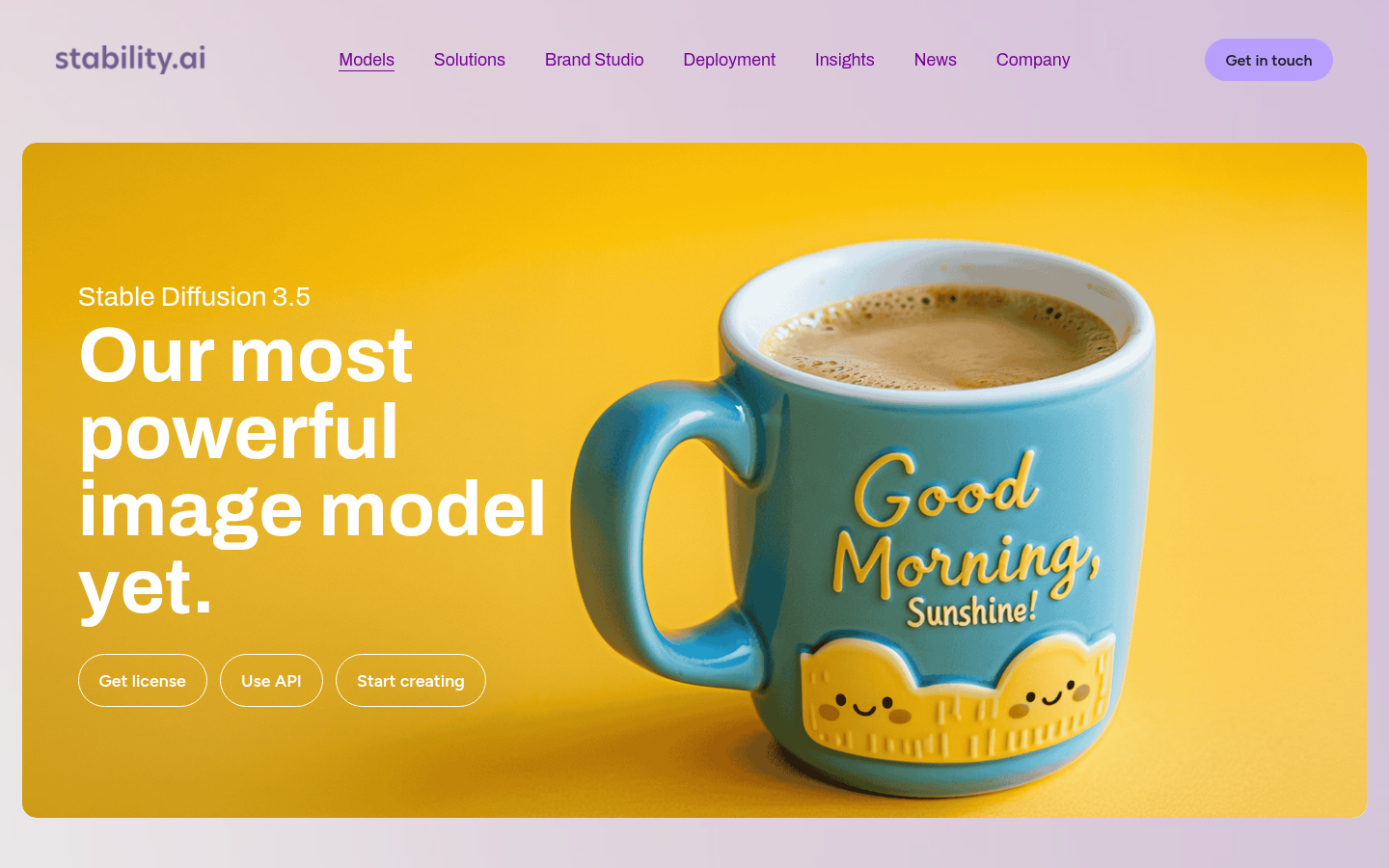
Stable Diffusion is the odd one out on this list because the model weights themselves, SD 1.5, SDXL, SD3 and newer releases, are free and open, no subscription anywhere in the chain if you run it yourself. That openness is also why it powers dozens of other free and paid front-ends, including OpenArt AI above.
The honest limitation: running it well means choosing a checkpoint, a front-end (ComfyUI and similar tools), and often a GPU with enough VRAM, or renting one by the hour. That setup tax is the single biggest reason casual users bounce off Stable Diffusion and go looking for a hosted tool that just works. If you are comfortable assembling your own toolchain, nothing on this list gives you more control for less money.
Where this breaks down: the friction nobody advertises
None of these five free tools reproduces Midjourney's specific painterly, slightly dreamlike rendering style on the first try. If that exact look is what you are chasing, for a book cover or a concept-art portfolio piece, expect to spend real time on prompt engineering with any of them, and know that Midjourney's paid tier still edges them out on that narrow use case. Free tiers everywhere also share the same trade-off: daily or monthly caps that make heavy iteration expensive in time even when it costs nothing in money.
Which free Midjourney alternative to pick
For most people typing "midjourney free alternative" into Google, OpenArt AI is the strongest overall pick: the free tier is workable, the model range is the widest here, and LoRA character training is the one feature that genuinely closes a gap with paid tools. If photorealism specifically is the goal, run Leonardo AI's free daily allowance first. If the image needs to contain readable text, skip straight to Ideogram. Playground is the right call for merch and social templates rather than fine art, and Stable Diffusion is worth the setup tax only if you already know you want that level of control.
At-a-glance
| OpenArt AI | Leonardo AI | Ideogram | Playground AI | Stable Diffusion | |
|---|---|---|---|---|---|
| Free plan | Yes, limited monthly tokens, no card required | Yes, daily token allowance resets each day | Yes, limited daily generations, no card required | Yes, free to start, no card required | Yes, open-weight model, hosting cost is separate |
| Models available | 100+ models: Flux, SDXL, DALL-E-compatible styles | Multiple in-house fine-tuned and custom models | Ideogram 4.0 plus earlier versions | GPT Image 2, Nano Banana Pro, Seedream | SD 1.5, SDXL, SD3 and community checkpoints |
| Best output style | Broad, style depends on the chosen model | Photorealistic and illustrative | Text-accurate graphics and logos | Templated merch and social graphics | Depends entirely on the checkpoint chosen |
| Setup effort | Low, browser-based, pick a model and prompt | Low, browser-based dashboard | Low, browser-based prompt box | Low, template-first browser workflow | High, requires a front-end and often a GPU |
| Commercial usage rights | Included on paid plans, check free-tier terms | Included on paid plans | Included on paid plans | Included, plus print-on-demand fulfillment | Open license, checkpoint terms vary by source |
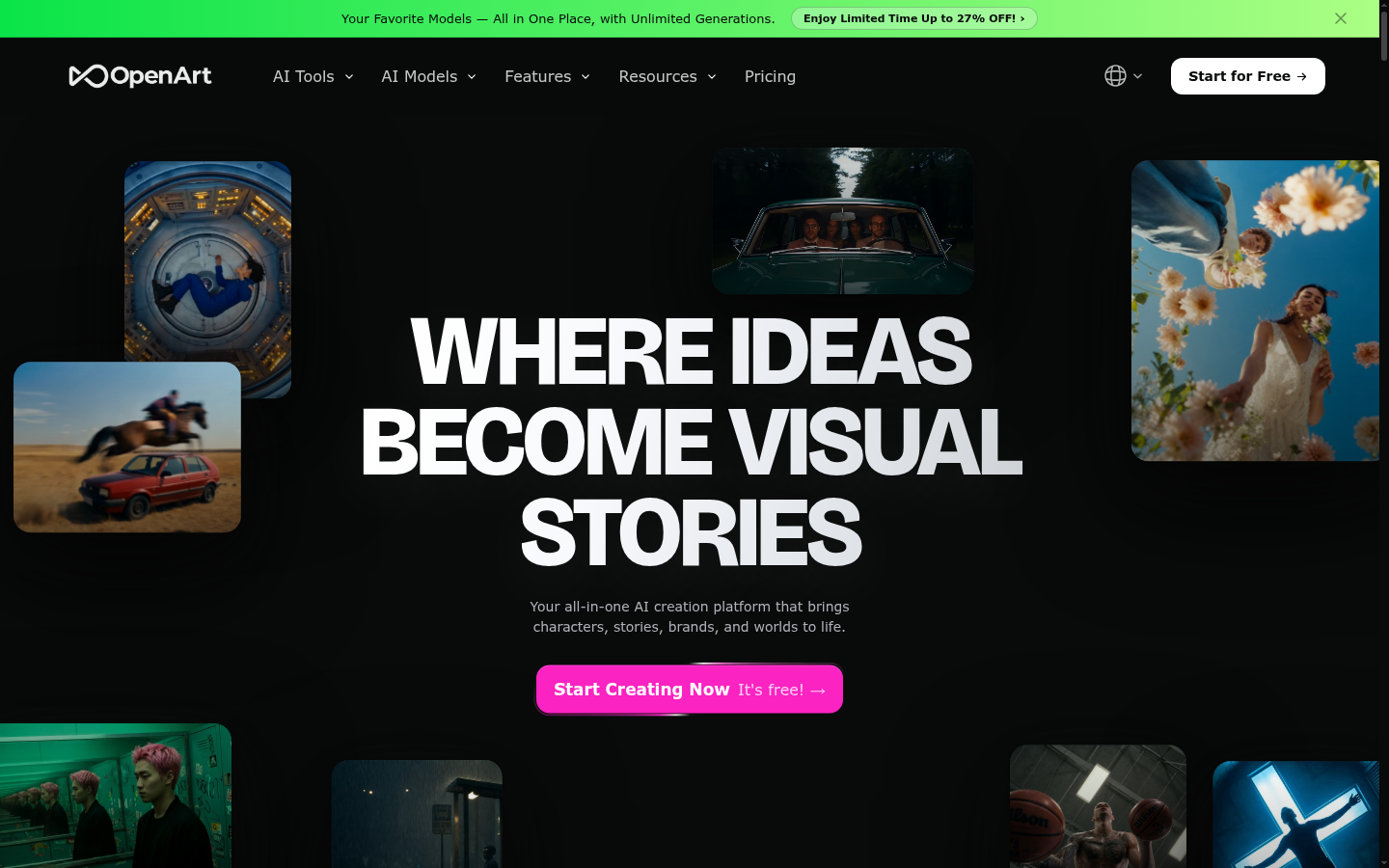
OpenArt AI
- Free tier gives enough monthly tokens to actually test more than one model before paying
- Access to 100+ models, Flux, SDXL, DALL-E-compatible styles, behind one subscription
- LoRA character training keeps a subject or product recognizable across a whole batch
- Credit cost varies a lot between models, so a heavy render can drain the monthly allowance fast
- No video generation, this is an image-only workspace
The most defensible free pick when you want model breadth and repeatable characters, not just one house style.
Leonardo AI
- Daily free token allowance is generous enough for a real test run, no card required
- Photorealistic and illustrative models both hold up well against Midjourney's output
- Built-in upscaler exports print-ready files without a separate tool
- Free daily tokens reset and run out fast once you start iterating on a prompt
- Some of the sharper inpainting and editing tools sit behind a paid tier
Closest to Midjourney's output quality on a free plan, if you can live with the daily reset.
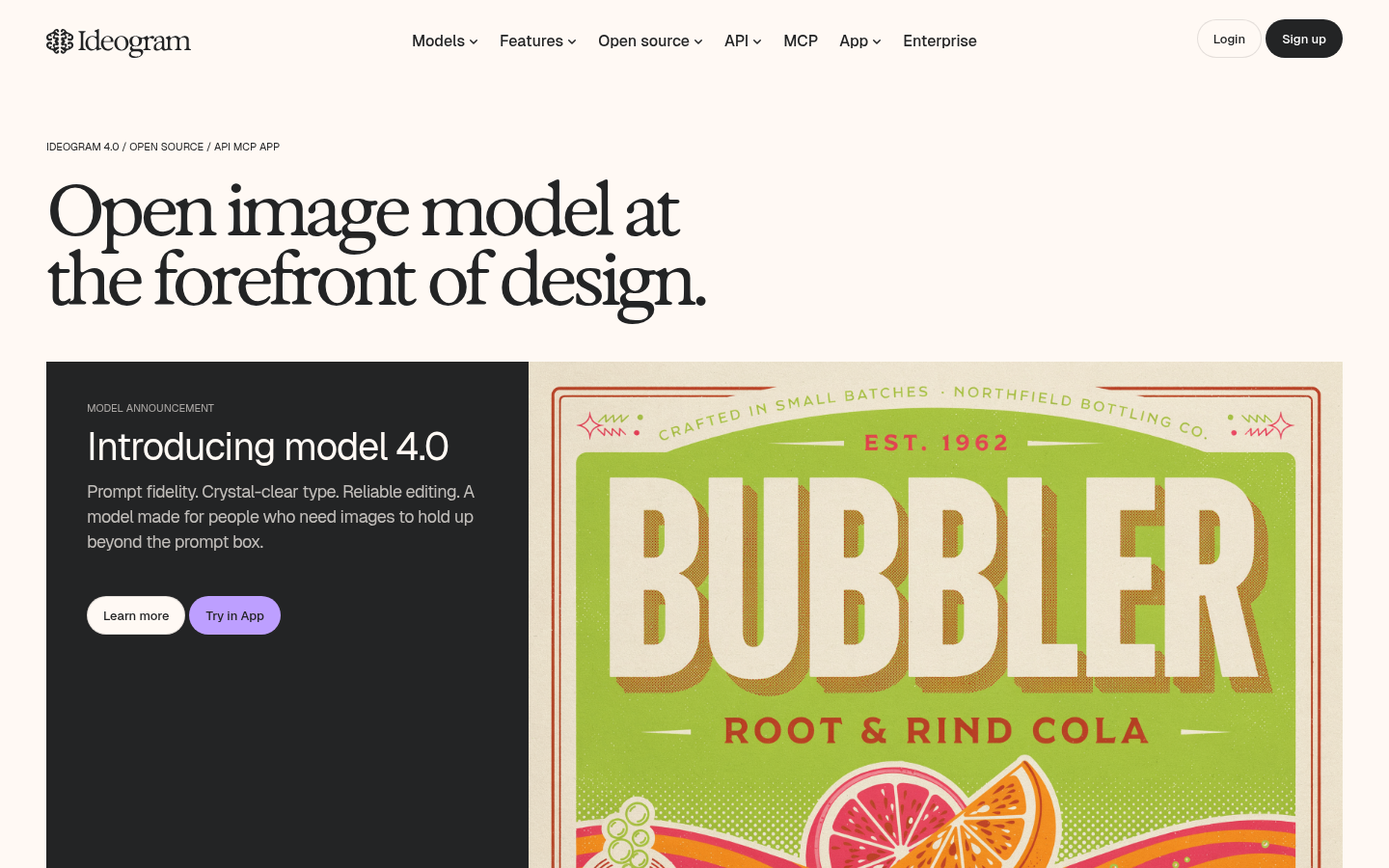
Ideogram
- Free tier needs no credit card and covers casual daily use comfortably
- Best-in-class at rendering legible, accurate text and logos inside an image
- Character-consistency tools keep a subject recognizable across a batch of generations
- General photorealism on non-text scenes lags behind Leonardo and OpenArt AI
- The daily free generation cap is tight once you start iterating on a design
Skip it for pure art, pick it the moment your prompt needs a word to render correctly.
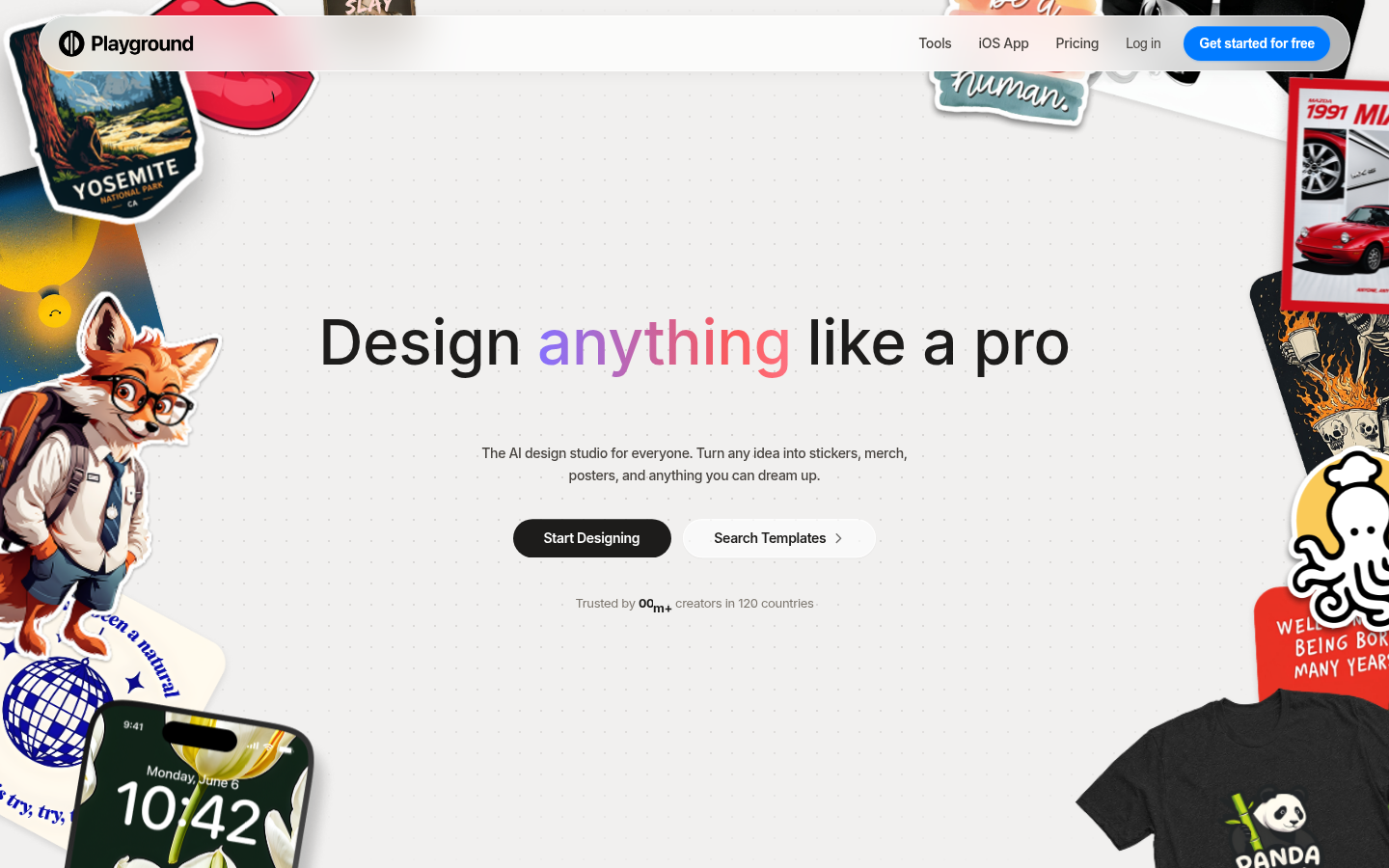
Playground AI
- Genuinely free entry point, no credit card required to start generating
- Template library makes stickers, posters and t-shirt mockups approachable without design skills
- Several leading models, GPT Image 2, Nano Banana Pro, Seedream, sit behind one prompt box
- Leans toward merch templates rather than freeform, stylized art generation
- Free tier resolution and generation volume are capped for heavier iteration
A fair Midjourney swap for print-and-ship graphics, a weak one for stylized portrait work.
Stable Diffusion
- The model weights themselves are free and open, no subscription required to use them
- Powers dozens of free and paid front-ends, so you are never locked to one vendor
- Full control over checkpoint, sampler and settings once everything is set up
- Running it well means choosing a front-end, a checkpoint and often a GPU, that setup tax is real
- No official hosted experience, you assemble the workflow yourself from separate parts
Free in the truest sense, but the least beginner-friendly entry on this list.
Verdict
OpenArt AI is the free Midjourney alternative most people should try first: the model range and LoRA character training earn it the top spot without needing to stretch the truth about its limits. Leonardo AI is the better free pick for photorealism specifically, Ideogram for anything with text, Playground for merch, and Stable Diffusion for anyone willing to build their own toolchain for free rather than pay for convenience.
How we tested
We tested the free tier of each tool in July 2026 using the same three prompts: a photorealistic product shot on a plain background, a painterly character portrait, and a poster layout with a short line of text. For each tool we recorded whether a credit card was required to sign up, the realistic number of usable free generations per day or month, and where the output broke down against the prompt. Pricing and free-tier limits were checked directly on each vendor's site rather than taken from older reviews, since free-tier terms on AI image tools change often.